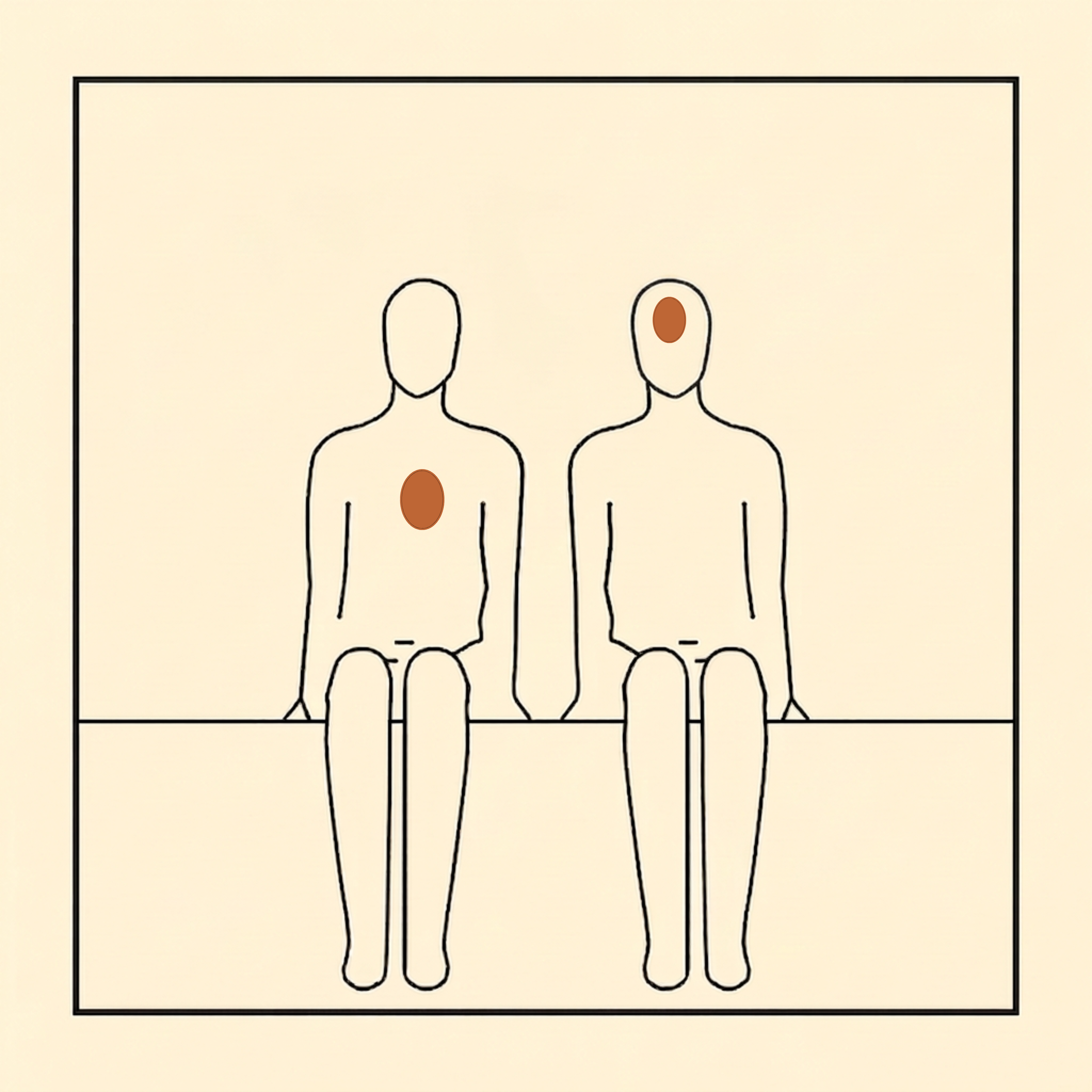
Measuring the Caregiver Experience
Different audiences need different ways of understanding the same evidence.
This work explores how caregiver knowledge is recognized, measured, translated, and applied across healthcare.
Patient engagement surveys provide valuable insight into how caregivers experience interactions with the healthcare system. They ask whether caregivers felt respected, informed, listened to, and involved in care. These are important questions that help organizations improve those interactions.
They were not designed to measure every aspect of caregiving.
Many responsibilities happen between encounters with the healthcare system: coordinating care, interpreting fragmented information, researching treatment options, and making decisions with limited support. These experiences often shape caregiving but may fall outside the scope of existing measures.
Did you feel respected? Did you receive adequate information?
These are important questions. They are different from asking whether a caregiver spent seventeen hours coordinating services or countless hours researching information because getting it wrong could affect someone they love.
What we measure shapes what we understand. Experiences outside the scope of measurement become more difficult to recognize, compare, study, and improve.
The questions themselves are only part of the picture. How caregiver feedback is interpreted and used is equally important.
Where does that information go and what happens to the experiences that were never measured?

What kind of knowledge is the caregiver contributing, and how should the system recognize and use it?
Healthcare organizations increasingly invite caregivers to participate in advisory groups, research, quality improvement, and service design. These opportunities recognize that lived experience can strengthen healthcare.
Not every contribution, however, serves the same purpose.
Sometimes caregivers are invited to share personal experience. Other times they are asked to identify patterns, contribute to governance, or advise on system improvement. These roles draw on different forms of knowledge and benefit from different expectations and support.
Are you drawing on my lived experience or my expertise?
The distinction matters because caregivers may arrive expecting to share their story and find themselves contributing to governance, while others prepare as long-term partners but are asked only to describe personal experiences.
Recognizing that lived experience is not a single category of contribution may help organizations create clearer roles, better support participants, and make fuller use of caregiver knowledge.
Existing measures may not distinguish between personal and system responsibility.
Research puts the prevalence of significant guilt among dementia caregivers at approximately 65 percent (multiple sources, reviewed in Han and Hong, 2025). The Caregiver Guilt Questionnaire (CGQ), developed by Losada et al. (2010), identifies five validated categories:
All five are variants of self-assessed failure.
Two experiences are not counted. The first: the caregiver cannot determine whether a poor outcome was their responsibility or a function of system failure. The second: they have correctly attributed the failure to the system but had no mechanism to prevent it.
If guilt persists because a caregiver cannot distinguish their own responsibility from what the system offloaded onto them, processing the emotion may not resolve it. Clarity about where responsibility actually lies may be part of that process. Distinguishing between personal responsibility and system responsibility may require new ways of measuring caregiver experience.
Losada et al. (2010). Development and validation of the Caregiver Guilt Questionnaire. International Psychogeriatrics, 22(4), 650–660. Han and Hong (2025), cited as source for prevalence estimate.
Understanding measurement gaps is only the first step.
These tools translate the same ideas into practical resources for caregivers, researchers, and healthcare organizations.
For caregivers
Caregiving challenges often feel overwhelming because it is difficult to know who to ask for help or how to begin the conversation. This tool helps caregivers identify what feels heaviest, who is best placed to help, and provides language they can adapt for those conversations.
Open Caregiver Conversation ToolFor providers and researchers
Caregiver measurement instruments capture different aspects of the caregiving experience. This browser allows researchers and providers to compare documented instruments, explore where each measures well, identify documented gaps, and consider how those gaps may influence practice.
Open Caregiver Measurement ExplorerBetter decisions begin with understanding the right kind of knowledge. Different audiences need different ways of understanding the same evidence.